Britain is still building up.
These five projects are not a ranking. Together, they show a market investing in offices, homes, regeneration, heritage and increasingly demanding building standards.
The UK construction story in 2026 is not one single story. Some sectors remain under pressure, costs are still being watched closely, and higher building-safety requirements are changing the way projects move from design into delivery.
But look at the cranes, concrete cores and structural frames rising across London and Birmingham this October and another picture emerges: major developers are still committing to ambitious buildings, high-density urban regeneration and premium workplaces.
For builders' merchants and material suppliers, these projects matter for more than their architecture. Every high-rise is also a supply-chain story: boards, insulation, fire protection, structural materials, facades, roofing, interiors, logistics and thousands of detailed specifications that have to arrive in the right place, in the right quantity and at the right stage of construction.
120 Fleet Street / Evergo Tower
Fleet Street spent generations as the physical home of Britain's newspaper industry. Now one of its most recognisable addresses is becoming a symbol of the street's next chapter.
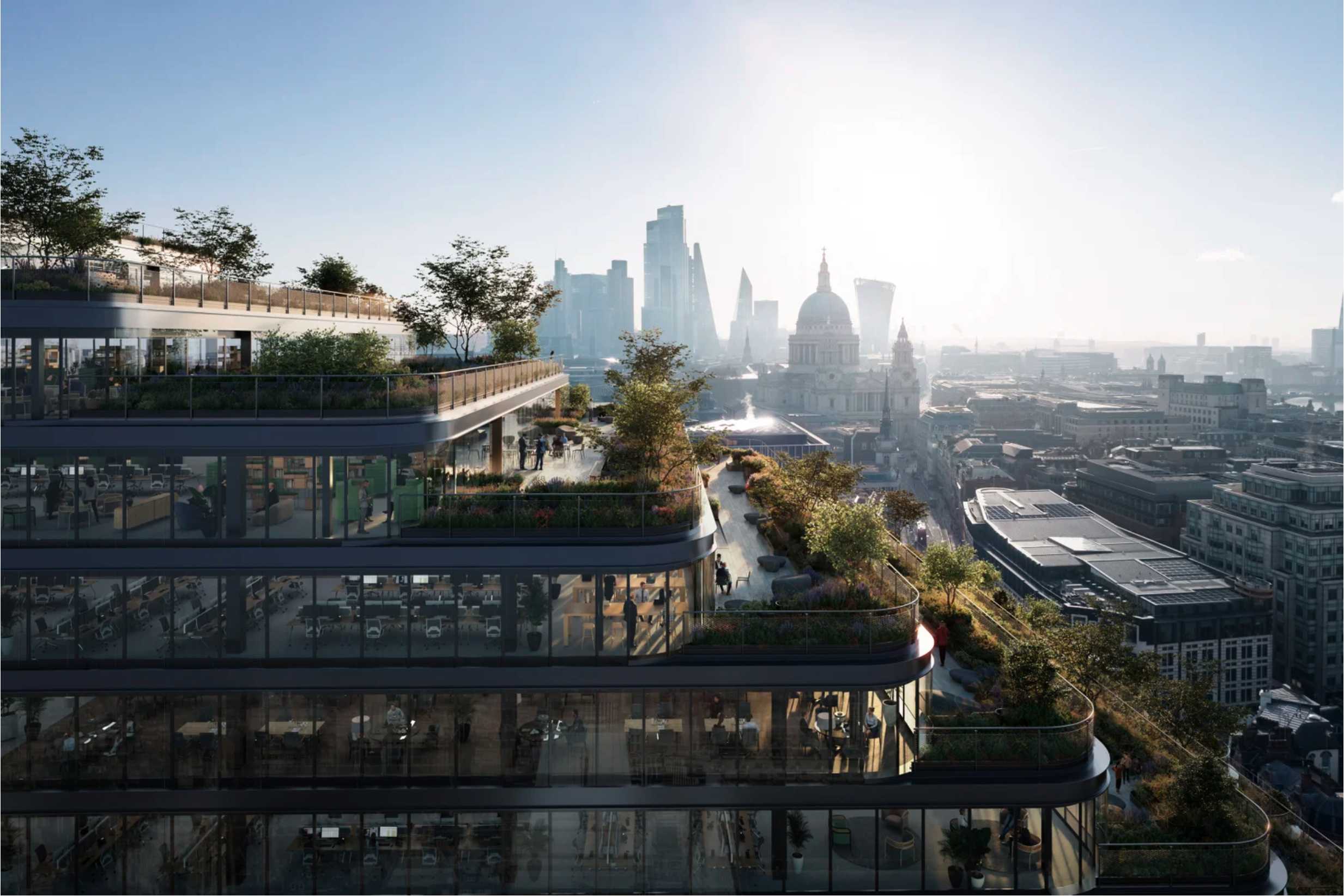
The redevelopment is in construction and will replace the former River Court building with a 21-storey commercial building known as Evergo Tower. The wider scheme will provide more than 800,000 sq ft of gross floor area, while the design is listed at approximately 75,000 sq m or 807,300 sq ft.
The architecture combines stepped massing and planted terraces with a slender Flatiron moment toward Shoe Lane. It also preserves the Grade II*-listed Daily Express Building, which is planned to gain stand-alone status and new public access.
The signal: confidence in the future of the City can coexist with respect for the buildings that gave it its identity.
55 Old Broad Street
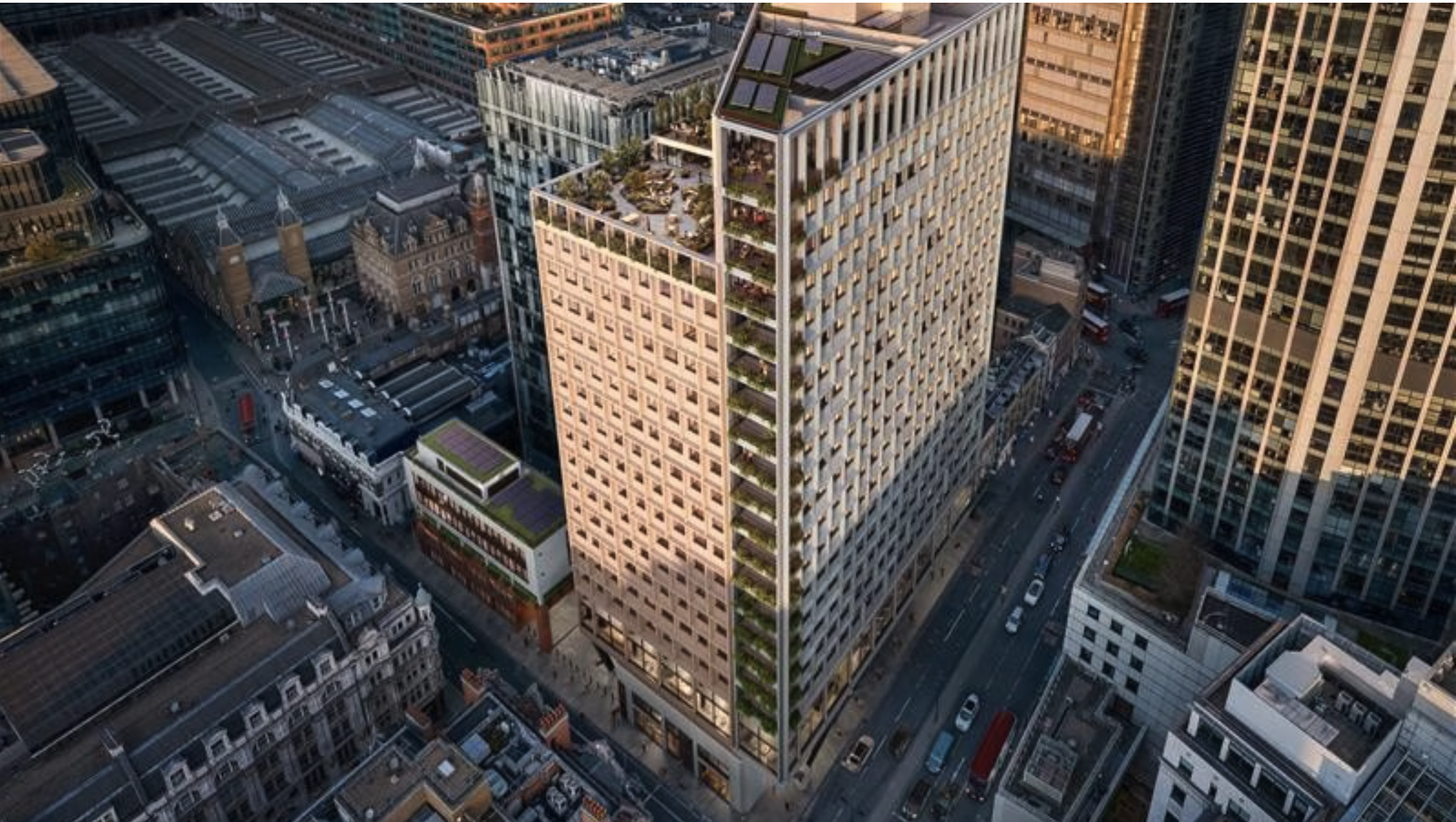
A few streets away, another major City scheme is moving from plans into physical construction. Skanska is due to start work in October on a 23-storey commercial development near Liverpool Street Station.
The contract will deliver approximately 270,000 sq ft of office accommodation, together with around 15,000 sq ft of retail, food, beverage and public-realm space. Completion is expected in late 2029.
The scope extends well beyond the shell. It includes mechanical, electrical and public-health installation and Cat A office fit-out, alongside refurbishment work at neighbouring 65 Old Broad Street and the Grade II-listed Bishopsgate Victorian Bath House.
With BREEAM Outstanding and NABERS 5* targets, the project shows how premium office construction is becoming more selective, more efficient and more technically demanding.
The Oria at 100 Kensington
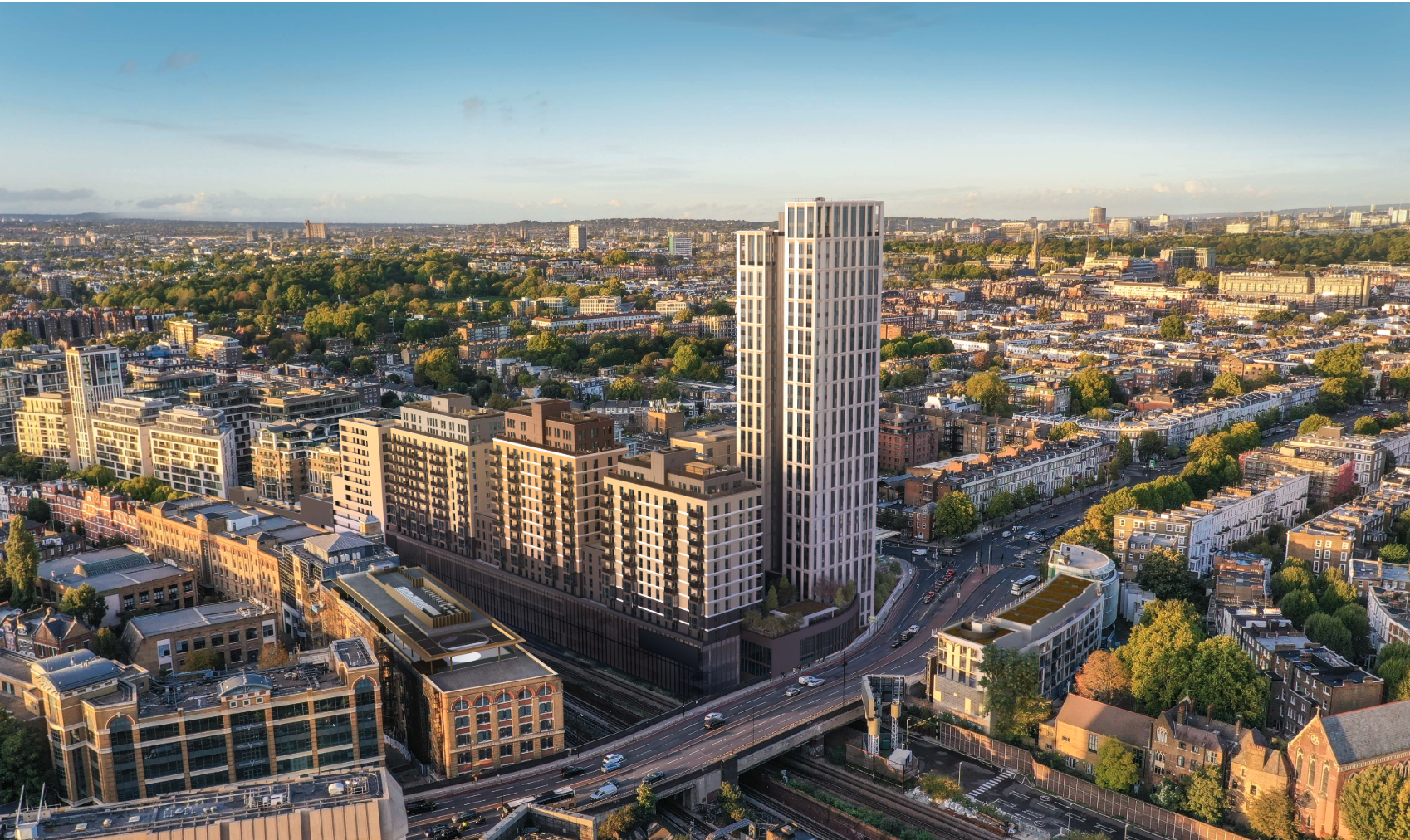
High-rise residential construction provides a different picture of London's vertical growth. Construction has restarted at the wider 100 Kensington development, a £500 million GDV scheme described as one of the largest residential projects undertaken in Kensington and Chelsea.
Its centrepiece, The Oria, is a 29-storey tower containing 129 market-sale apartments and penthouses. The tower is scheduled to top out in October 2026. The wider project also includes three lower mansion-style buildings inspired by Kensington's Victorian and Edwardian mansion blocks.
For the supply chain, a residential tower of this type means repeated floor plates, internal partitions, acoustic and thermal performance, fire-safety systems, high-quality finishes and intense coordination across hundreds of individual apartments.
The signal: London's housing challenge is increasingly being answered with a mixture of height, density and high-performance building systems.
Ebury Bridge Estate - Phase Two
Ebury Bridge may be the least glamorous name on this list, but it could be the most important for understanding how UK construction is changing.
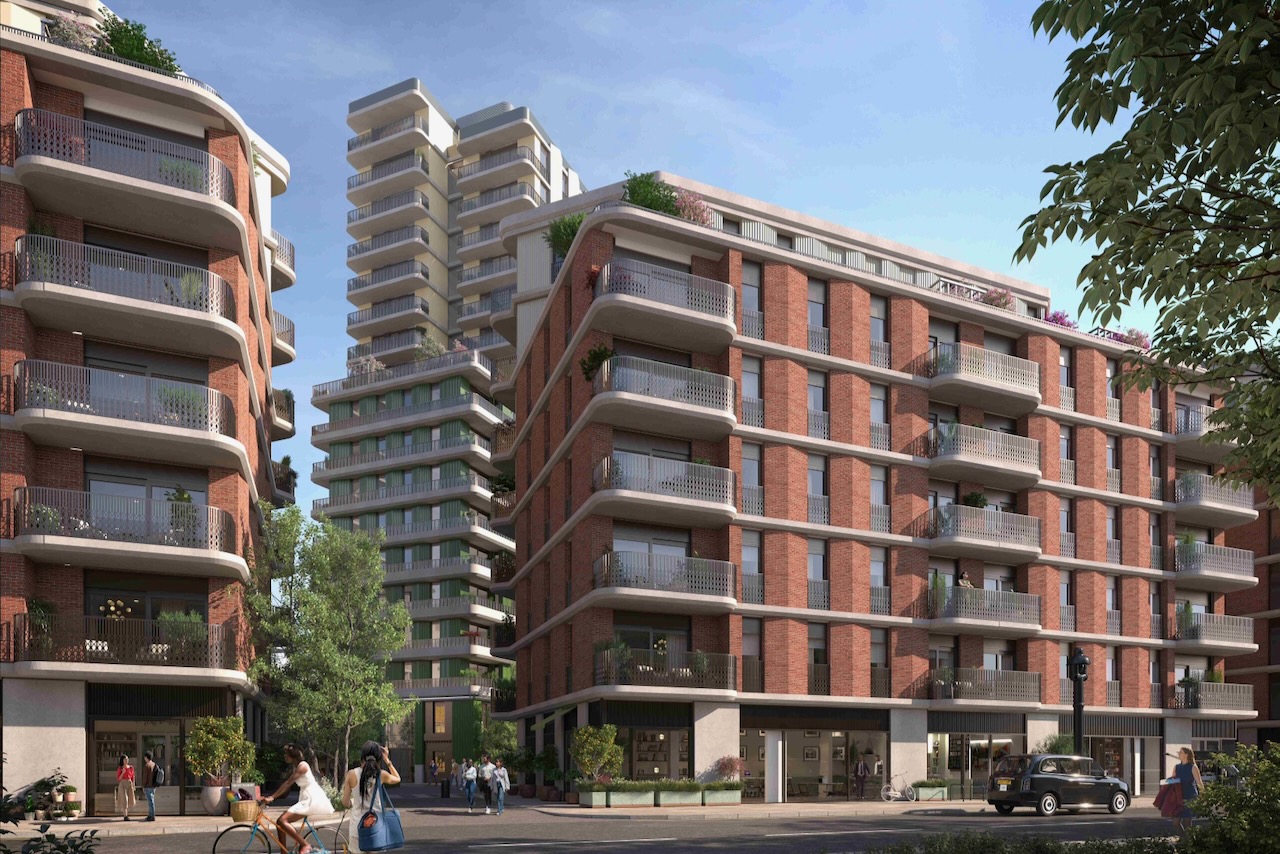
On 12 October, Westminster City Council announced that Phase Two had secured Building Safety Regulator Gateway 2 approval across five separate building-safety applications. The approval clears the way for major construction works on the next 334 homes. Westminster's approved main construction contract with McLaren is worth £229.34 million.
The milestone matters because major higher-risk residential projects now have to demonstrate compliance with the Building Safety Act before construction can proceed. That pushes fire strategy, structural design, material specification, documentation and traceability much closer to the centre of the construction programme.
The signal: in the new building-safety era, regulatory certainty is becoming a construction milestone in its own right.
Edition Birmingham
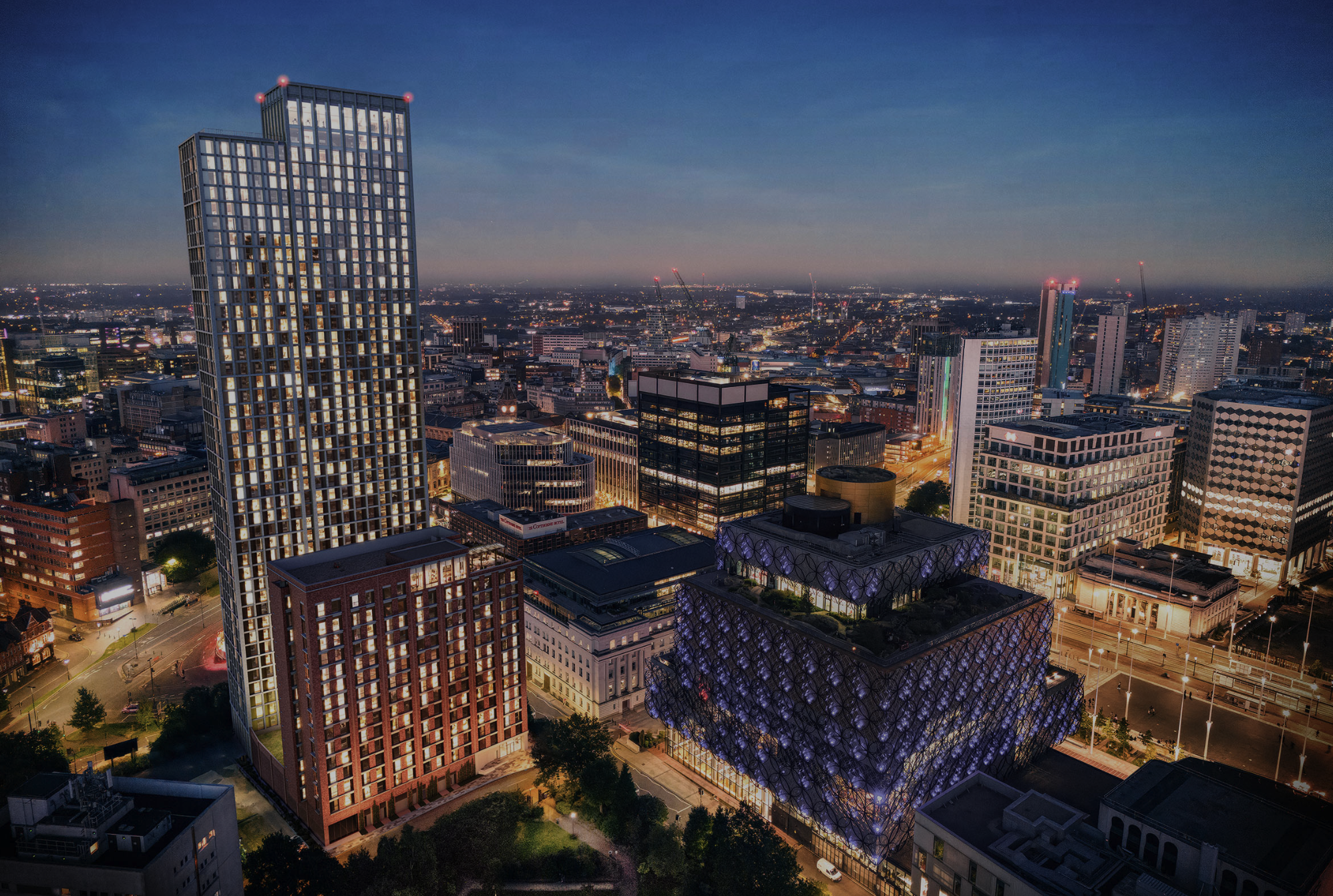
The final project takes us beyond London - and upward. Edition Birmingham is a 581-home residential development being delivered as two connected buildings: the 15-storey Park Residence and the 46-storey, approximately 150-metre Centenary Tower.
Its scale is enough to make it a skyline project, but the more interesting story is how residential towers are being sold and designed as complete lifestyle environments. Edition includes more than 14,000 sq ft of internal amenity space and over 9,000 sq ft of external private terracing.
For Birmingham, the project sits within a broader period of city-centre change and demonstrates that the UK's high-rise construction story is not confined to London. Regional cities are also competing for investment with taller, denser and more amenity-rich developments.
The signal: the next chapter of Britain's skyline is increasingly regional.
What these five projects tell us about UK construction
Taken individually, these are five very different developments. One is a City office and heritage restoration. One is a new premium workplace. One is a Kensington residential tower. One is a large council-led housing regeneration programme moving through the Building Safety Regulator. One is a 150-metre residential skyscraper in Birmingham.
Together, however, they point toward several encouraging themes: confidence is becoming more targeted; technical performance matters more; existing cities are being reinvented rather than abandoned; materials specifications are becoming more sophisticated; and the skyline is broadening beyond London.
Every one of these projects represents years of design, planning, engineering, procurement and investment becoming visible in steel, concrete, boards, insulation, facades and finished spaces. For the construction and materials industries, the opportunity is not simply to watch the skyline change. It is to understand what the next generation of buildings demands - and to be ready to supply it.
Britain is still building up, and the materials story behind each project is becoming more sophisticated.